


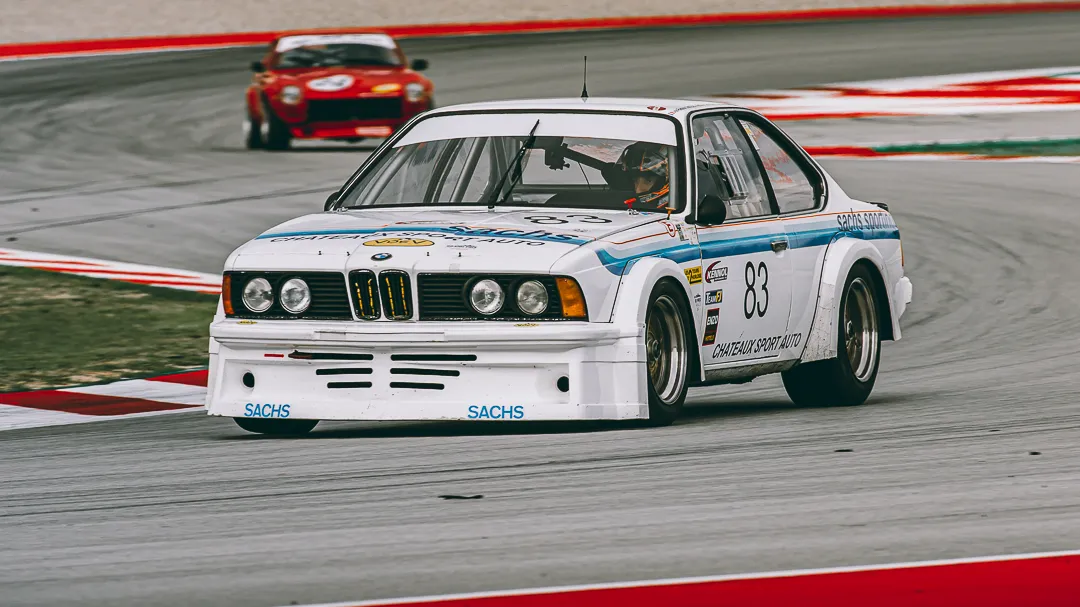
The BMW 635 CSi's competition career spanned nearly ten years, beginning even before the Group A era. Homologated in Group 2 in 1980 as the successor to the venerable CSL (E9), the elegant coupé soon made its mark on Europe's circuits. To this day it remains a weapon of choice in historic racing, as V de V Sports demonstrates season after season.
From Group 2 to Group A: three European titles and a hat-trick at Spa
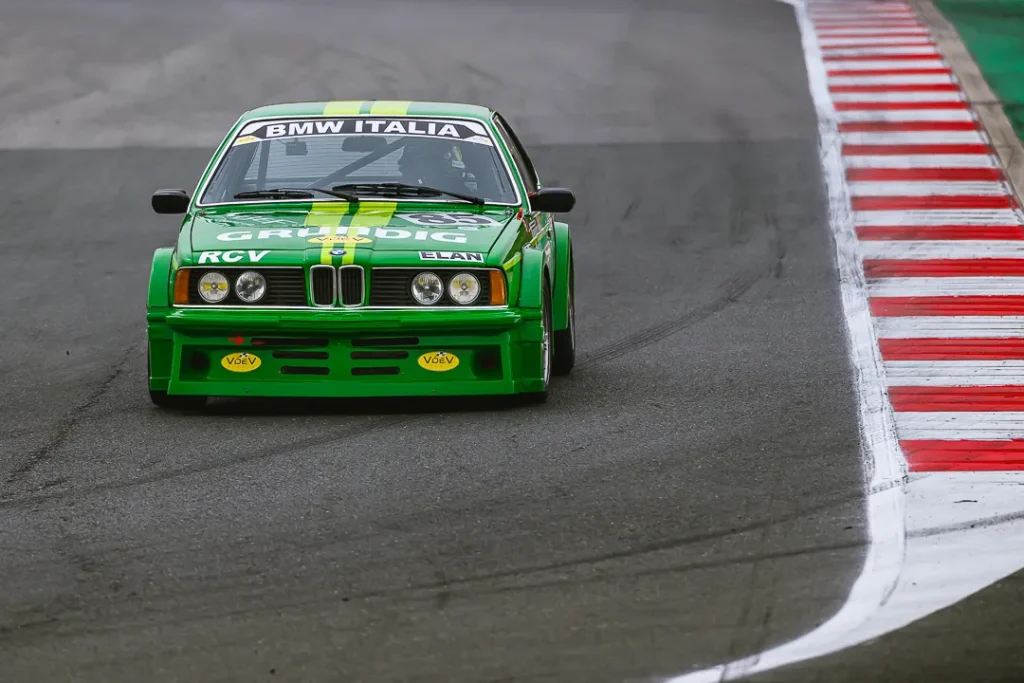
The 635 coupé's sporting story begins in 1980. That year, BMW Italia backed the Racing Corporation Vienna team, which entered a 635 CSi in the European Touring Car Championship (ETCC). Harald Neger, Heribert Werginz and Umberto Grano took four wins between them, at a stroke establishing the model as a credible contender.
The crowning achievement soon followed. Under the Eggenberger Motorsport banner, the pairing of Helmut Kelleners and Umberto Grano brought the 635 CSi two consecutive ETCC titles, in 1981 and 1982 — the 1981 campaign yielding five victories from eight races. Dieter Quester completed the hat-trick in 1983, claiming the continental crown in his turn.
The switch to Group A did nothing to blunt this supremacy. When the FIA reshuffled the deck in 1982 — Group 2 had required 1,000 production examples, Group A demanded 5,000 built within twelve months — BMW pressed on with the development of its coupé. Alpina and Burkhard Bovensiepen took charge of preparing the 3.5-litre M30 straight-six, now credited with 290 to 310 bhp. The results came at once: 1983 brought not only Quester's title but also the first of the model's three victories in the Spa 24 Hours (1983, 1985 and 1986). The 635 CSi added two further wins in the Nürburgring 24 Hours (1984 and 1985). The grand coupé had entered touring car legend.
"The 635 Coupé gave us the keenest driving pleasure, so evident is its perfection in every department."
Pierre Dieudonné, Auto Hebdo road test, 1983
An ideal weapon for historic racing and V de V Sports
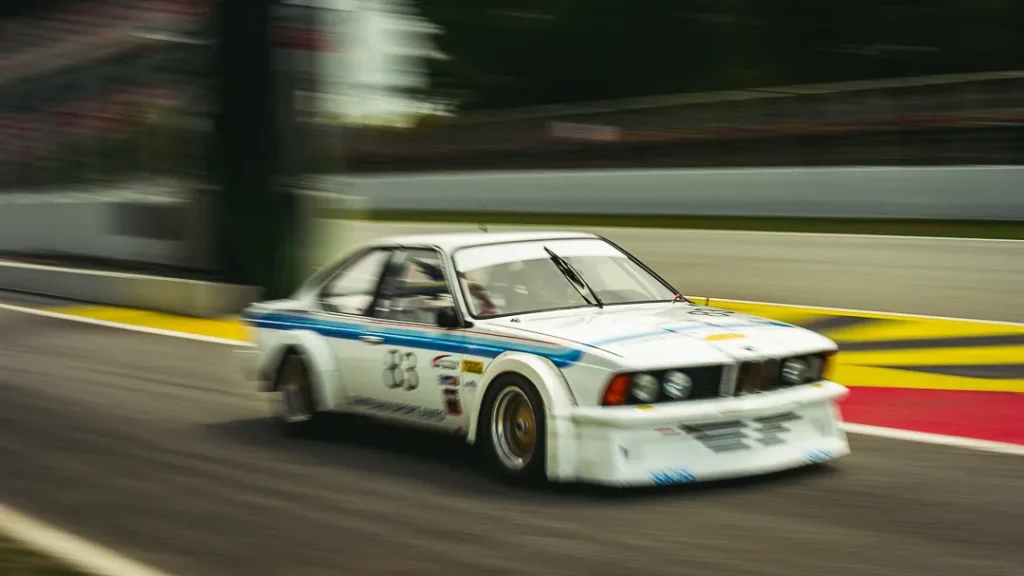
Today, the BMW 635 CSi remains a regular sight on historic grids. So it is in V de V Sports, with the example entered by Châteaux Sport Auto: a 1979 car prepared to Group 2 specification, which took outright victory in the V de V Sports Barcelona 6 Hours in 2023.
What are the strengths of this gentleman driver's coupé? "It's a car that is not as physical to drive as it might suggest," explains Matthieu Châteaux. "It's powerful, but relatively easy to exploit. We chose a Group 2 preparation for our car, because it allows more freedom than the Group A homologation."
The widened tracks are the most visible sign of this, letting the German machine depart somewhat from standard trim. "It's not merely cosmetic: it also brings higher cornering speeds."
"The BMW 635 is powerful but relatively easy to exploit."
Matthieu Châteaux
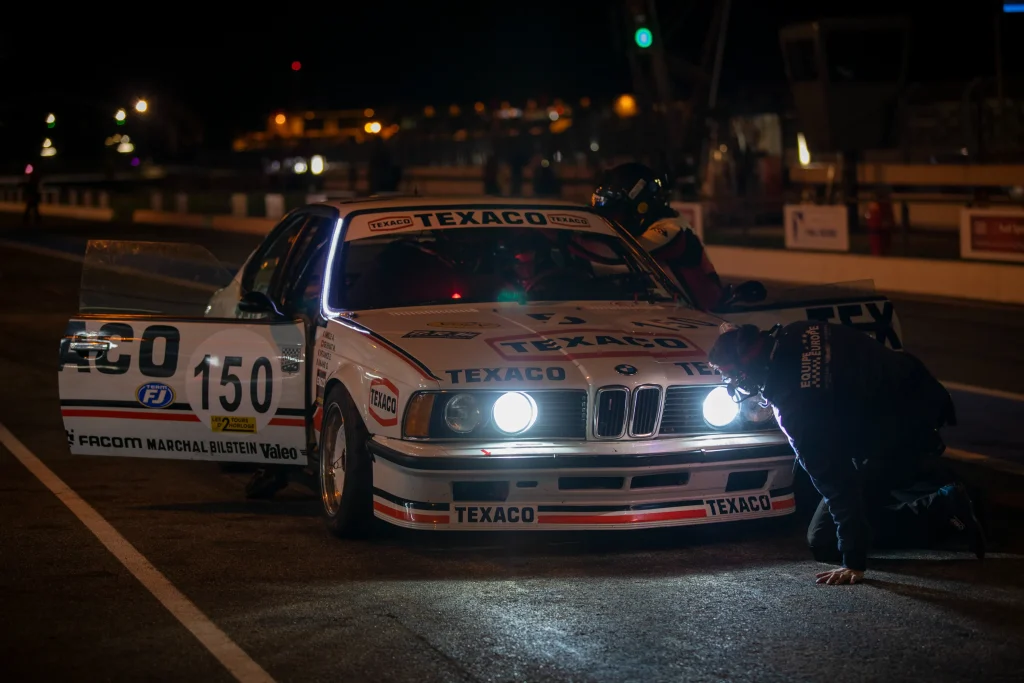
The car, which is contesting the Navarra 1,000 Km and the 2026 2 Tours d'Horloge, is devoted entirely to the discipline of endurance racing. "Since 2020 we have entered it exclusively in endurance events. To that end, we have strengthened certain components and optimised the rest. The wheel-retention system has been converted to a centre-lock nut, and the lubrication and cooling of both gearbox and differential have been reworked to last the distance." With engine revs set ahead of each race to draw the best from the 3.5-litre straight-six, the 635 CSi combines power, torque, reliability… and sheer pleasure.
BMW 635
3 consecutive ETCC titles (1981-1982-1983) and 3 victories in the Spa-Francorchamps 24 Hours (1983, 1985, 1986).

350 bhp for 1,180 kg: the vital statistics of the racing 635 CSi in 1983 (against 1,460 kg and 218 bhp for the road car).

Nearly 10 years of competition, from Group 2 homologation to the late 1980s.
Recent Comments