


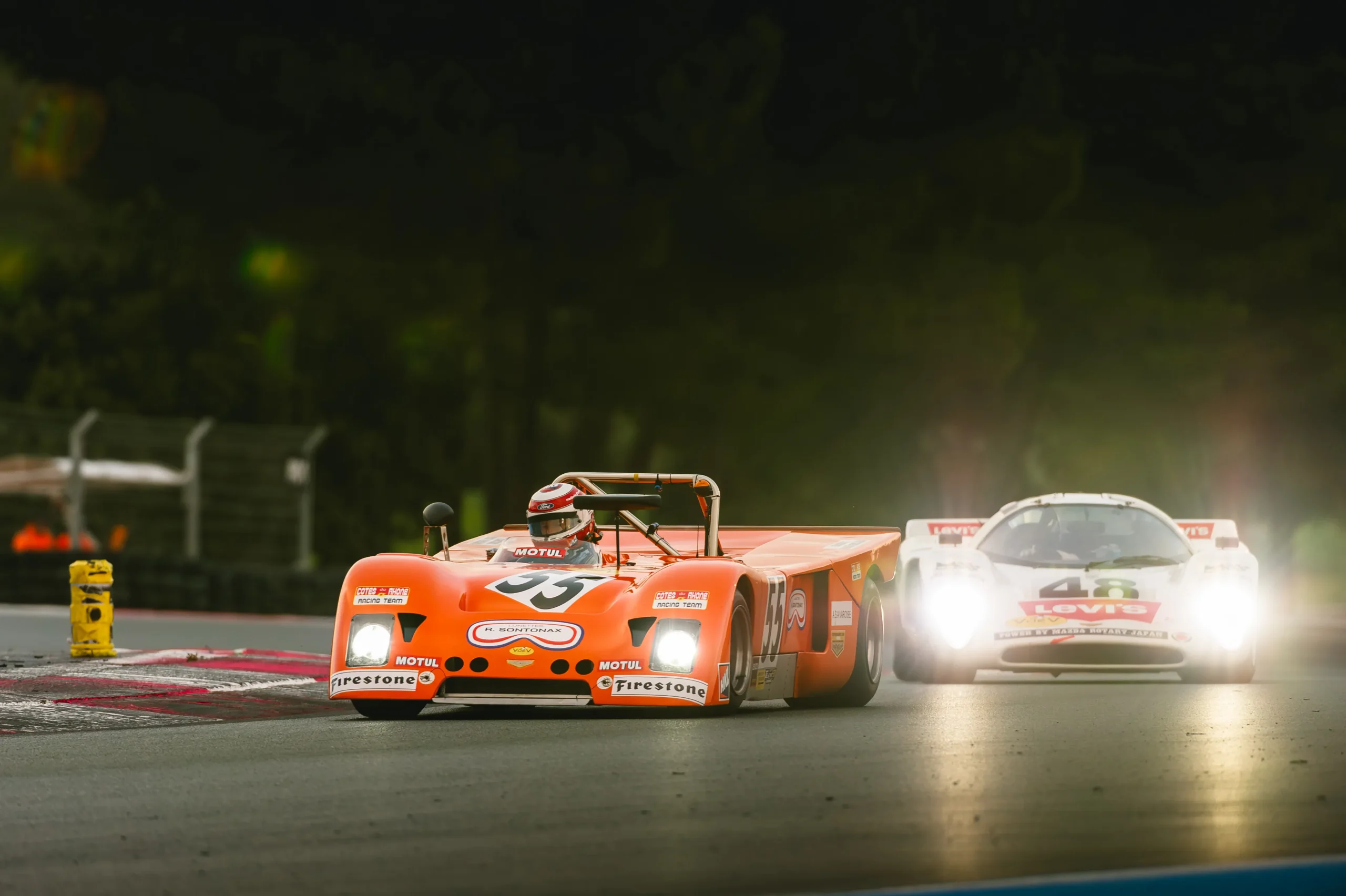
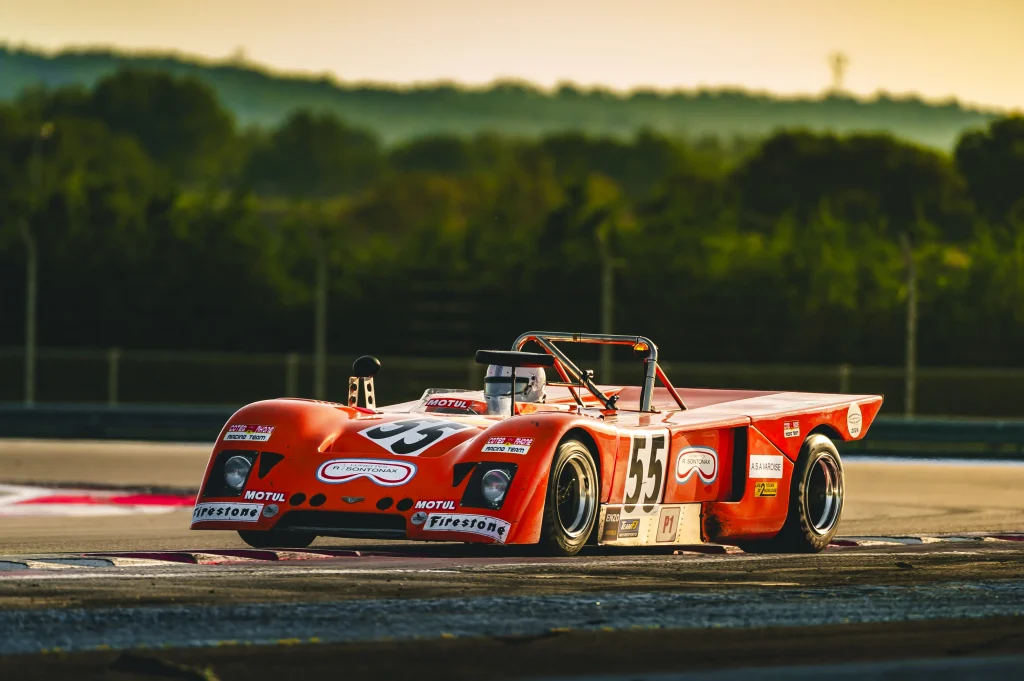
Three things shaped the Chevron B19: a close look at the opposition, one driver's persistence and the simple rulebooks of the early 1970s. Its story continues today in historic racing, and in V de V Sports in particular./strong>
The B19 began with Brian Redman. In April 1970, at Paul Ricard, the opening round of the new European 2-Litre Sports Car Championship, he watched the open Lola T210 go past and knew his B16 coupé was too heavy to compete. He pressed Derek Bennett, the head of Chevron, for an open car. Bennett said his customers' B16s had to come first, but in August he gave in. He had no budget to develop new bodywork, so he followed another of Redman's suggestions and copied the Porsche 908/3, whose aerodynamics had already been sorted.
Roofless and ruthless
The result was the B16 Spyder. It was about 70 kg lighter than the coupé and quick from the start. In the Nürburgring 500 km that September, Redman was more than two minutes ahead when fire destroyed the car. Chevron rebuilt it in 15 days and took it to Spa. There Redman fought Jo Bonnier's Lola wheel to wheel all the way to the last corner of the last lap, where both cars spun at La Source. Redman found first gear before Bonnier did and won. Chevron took the manufacturers' title by one point.
At the end of 1970, that one-off B16 Spyder became the prototype and the template for a production car. Chevron officially launched the B19 in 1971 as the finished version for customers. The works team ran it, and so did almost every private entrant: Red Rose Racing, DART, Canon Racing, and even Jo Siffert Automobiles, which entered one for Gérard Larrousse. Its engine was a 1,790 cc Ford Cosworth FVC, a 16-valve four-cylinder producing 240 bhp at 8,500 rpm.
Lauda's homecoming
On 23 May 1971 at the Salzburgring, Red Rose gave a B19 to a 22-year-old Austrian racing in front of his home crowd. Helmut Marko made a poor start, and Niki Lauda won with help from team-mate John Hine, who held off Merzario in the closing laps. It was a winning debut. Lauda then turned down an offer from Abarth so that he could focus on single-seaters, and that win, worth 9 points, turned out to be his only victory of the season.
The works B19, driven by Chris Craft, ran on chassis DBE12, named after Derek Bennett Engineering. It won first time out at Oulton Park and then kept breaking: brakes at Silverstone, a testing crash at Croft with Bennett himself at the wheel, and a broken throttle linkage at Brands Hatch. It was a privateer, John Miles, who won the British championship in his own Castrol-liveried B19. In Europe, Brian Robinson won the Martini International Trophy at Silverstone, but Lola took the manufacturers' crown, 57 points to Chevron's 46.
The B19 led to the B21, the B23 and the B26. It raced at Le Mans only once, in 1972, when Michel Dupont's no. 69 retired in the fifth hour with gearbox and clutch trouble. Even so, it held a special place for Paul Owens, Bennett's right-hand man, who always named the B19 as his favourite Chevron.
Photos : Gilles Chaulet
Recent Comments