


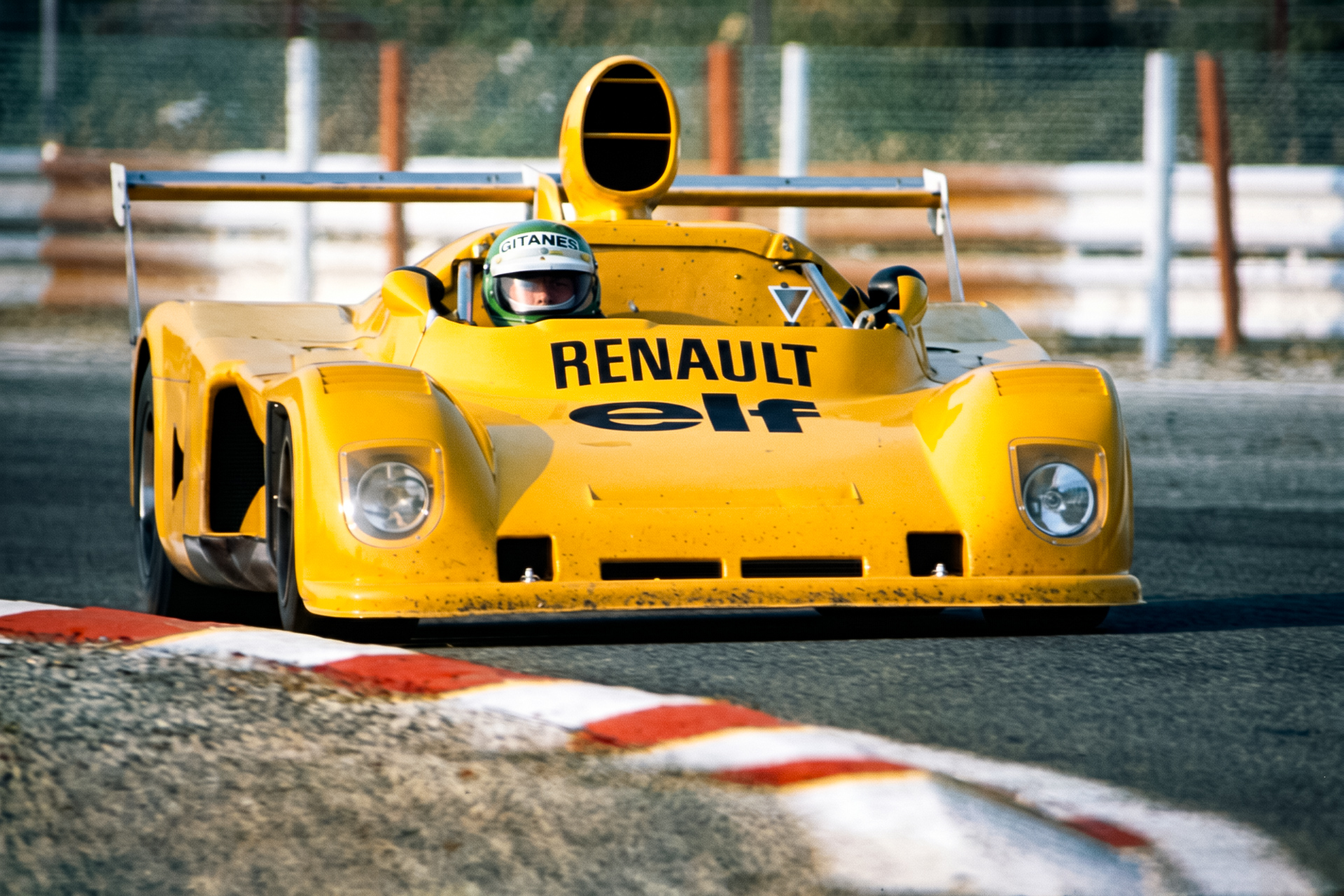
The year 2026 marks the 50th anniversary of the Renault Alpine A442’s debut at the 24 Hours of Le Mans. At the beginning of 1976, the prospect of taking a turbocharged V6 to victory at La Sarthe still seemed hugely ambitious, with the technology yet to prove itself at the highest level of endurance racing. Reliability and throttle response were regarded as two of the biggest obstacles standing between Renault Alpine and success in the world’s most demanding race.
Fifty years ago, Renault and Alpine officially returned to the 24 Hours of Le Mans with the ambition of establishing turbocharged engine technology at the world’s greatest endurance race. Their first campaign, in 1976, ultimately ended in retirement for the sole A442 entered, but the prototype’s potential was underlined by pole position and the fastest lap of the race, both set by Jean-Pierre Jabouille.
The Circuit Paul Ricard played a decisive role in the success of the A442 and A443 programme. Between 1976 and 1978, the cars completed extensive private testing there in the hands of some of France’s leading drivers of the era: Patrick Depailler, Guy Fréquelin, Jean-Pierre Jabouille, Jean-Pierre Jarier, Jean-Pierre Jaussaud, Jacques Laffite, Henri Pescarolo, Didier Pironi, Jean Ragnotti and Patrick Tambay.
The choice of the venue was no coincidence. The climate at Circuit Paul Ricard is often mild, even during winter, while the layout itself offered a feature unique among permanent European circuits at the time: a straight long enough - 1,800 metres - to replicate the demands of the Hunaudières straight at 24 Hours of Le Mans.
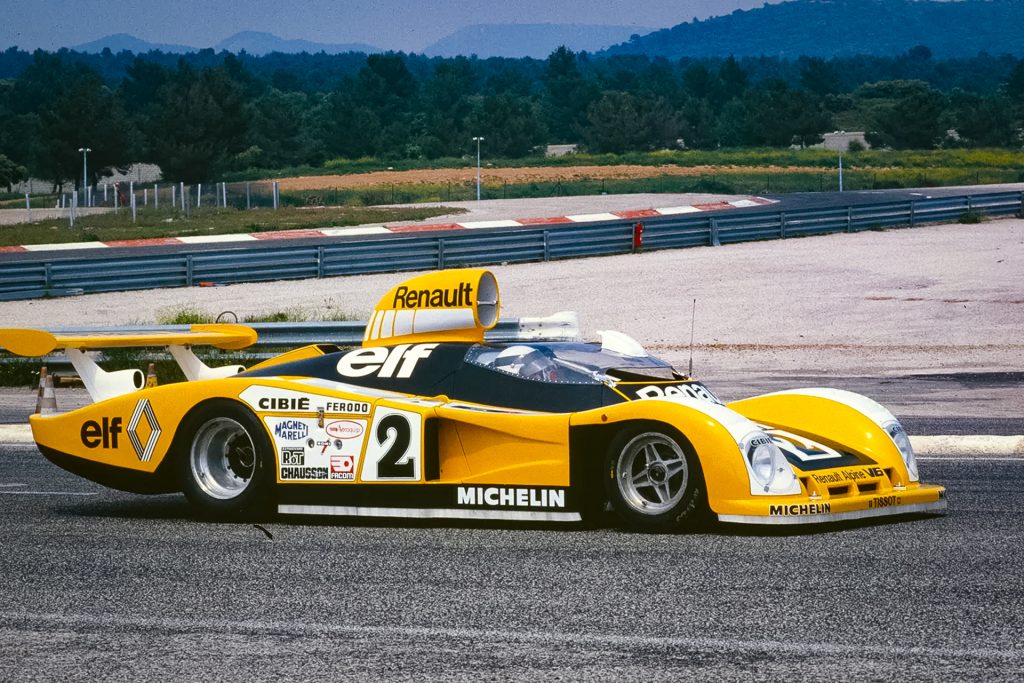
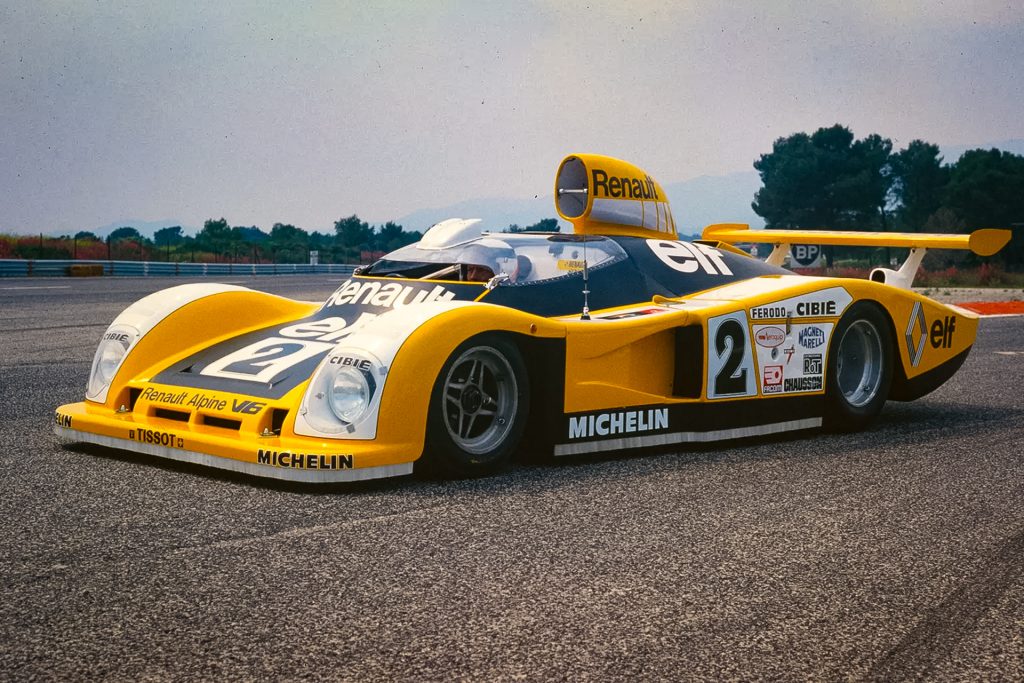
It was notably on the Mistral Straight that the distinctive plexiglass bubble was tested, a solution developed to improve aerodynamics and gain around 5 to 6 km/h in top speed, pushing performance towards 360 km/h. Following testing at Circuit Paul Ricard, some drivers adopted it while others rejected it due to the extreme cockpit temperatures it generated. While Didier Pironi and Jean-Pierre Jaussaud showcased its effectiveness by winning the 1978 24 Hours of Le Mans, the achievement was tempered by Pironi collapsing at the finish after the physical strain of the race.
Back to the Paul Ricard HQ
Fifty years after the start of this successful campaign, three Renault Alpine A441, A442 B and A443 will return to the circuit where they competed most frequently: Circuit Paul Ricard, on the occasion of Les 2 Tours d’Horloge. A A441 will be presented by Jean-Charles Rédélé (interview below), while an A442 B and an A443 will be brought by The Originals Renault – La Collection.
All three cars will take part in on-track demonstrations and will be on display to the public in the paddock. Alain Serpaggi, who was involved in the early stages of the programme from 1973 by developing the naturally aspirated 2-litre A440 and A441 sports prototypes, will be present. On track, he will be joined by Victor Jabouille and Julien Saunier.
Recent Comments